menuclose
Office in Carretera del Prat 8-14

A sustainable and efficient building, which, through the reuse of an existing structure, has enhanced its connection with the surroundings and created spacious, open areas designed for the well-being of users in direct contact with the outdoors

Edifici d’oficines Lumen a Barcelona

Lumen office building in Barcelona

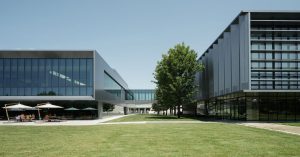
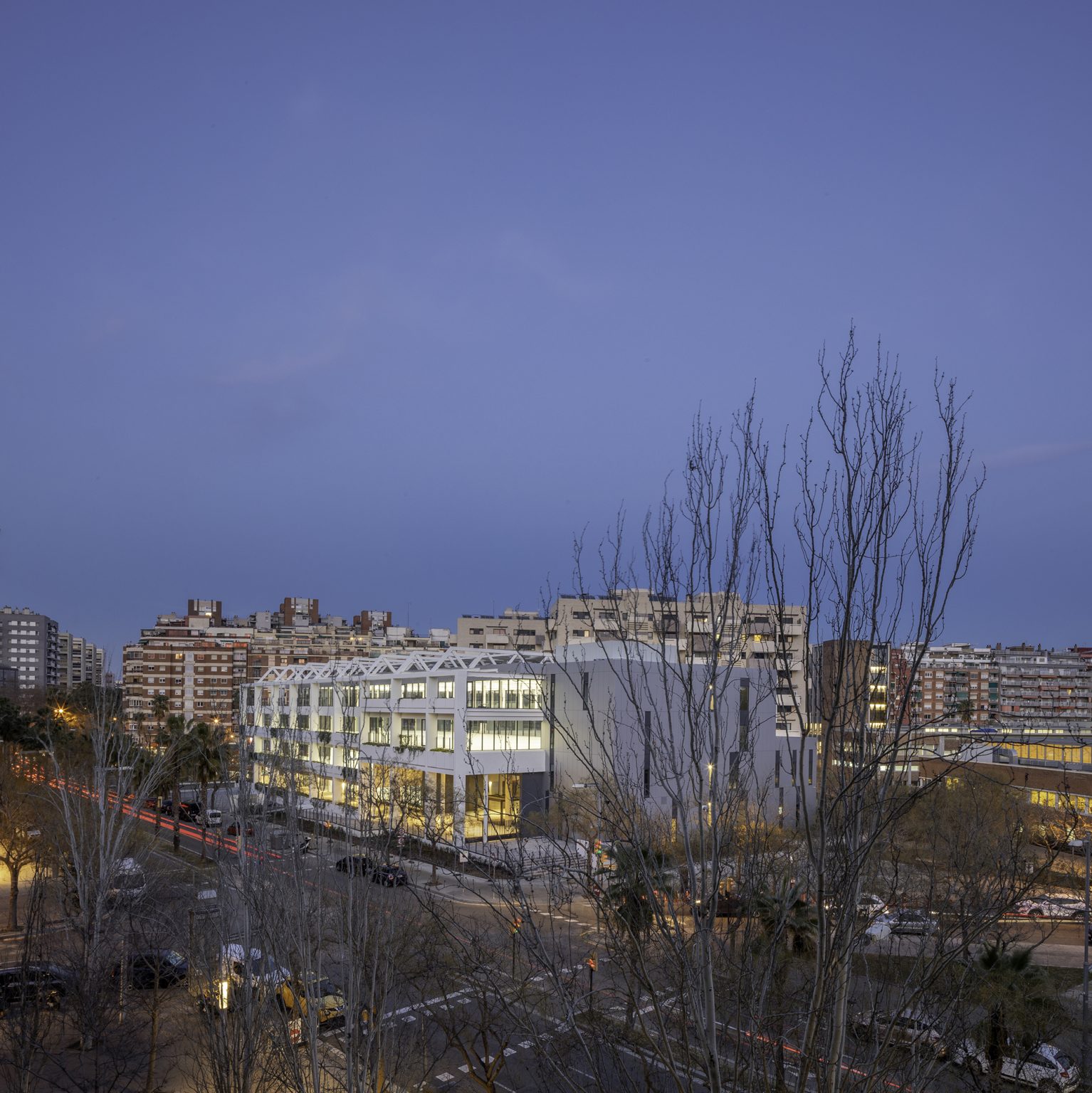
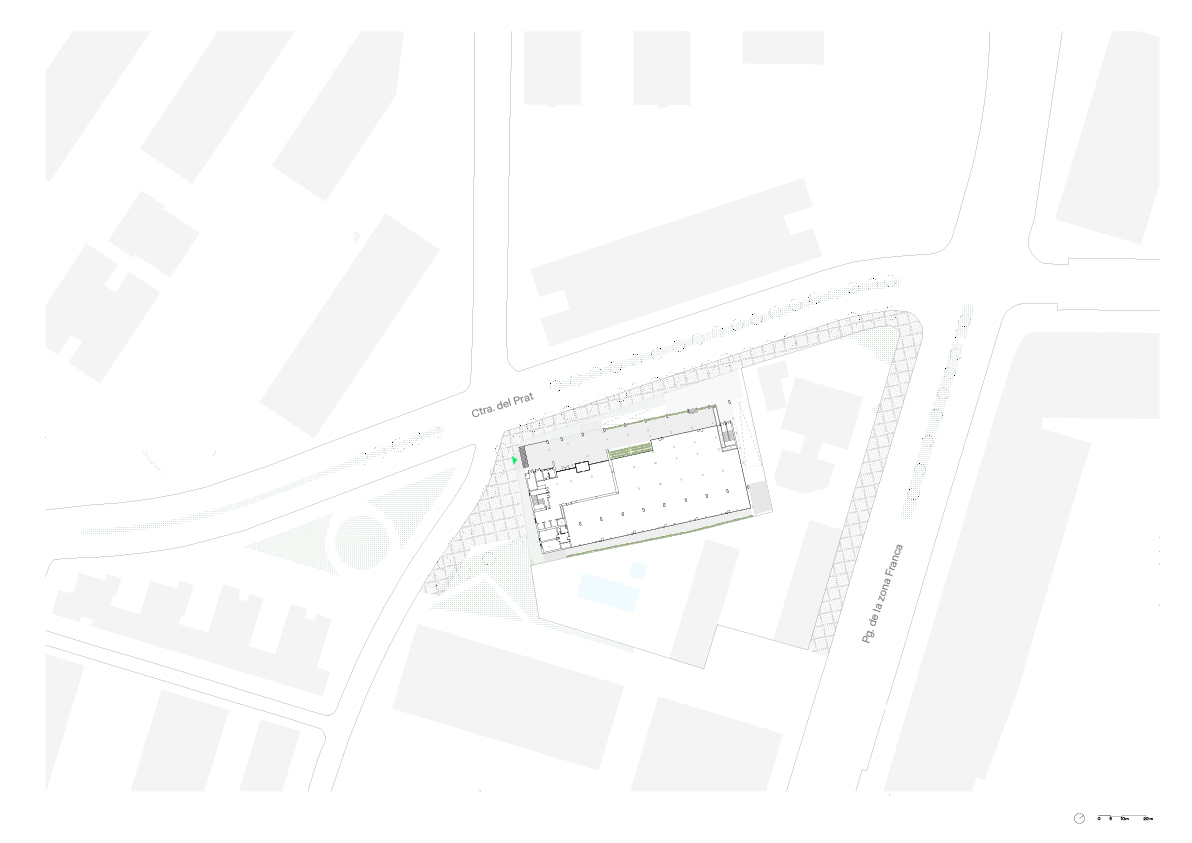
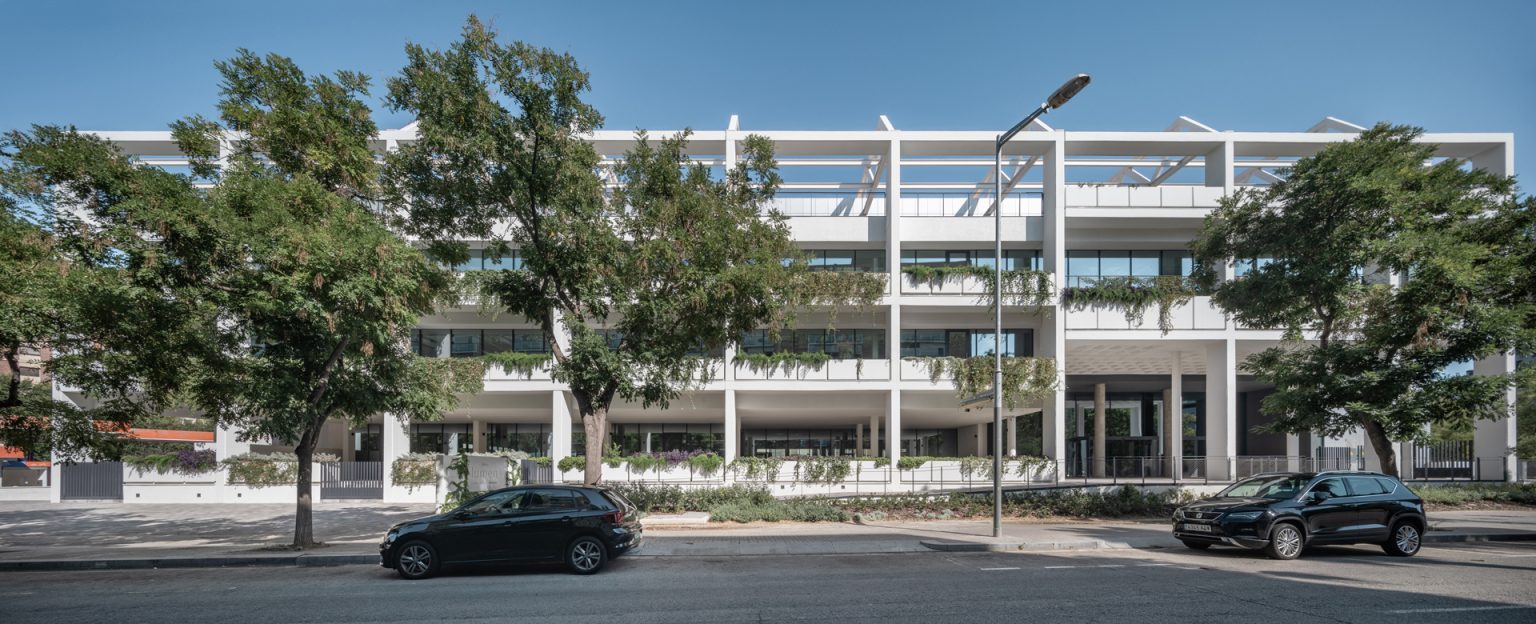
The office project on the old Carretera del Prat, located on the border between the municipalities of Barcelona and l'Hospitalet de Llobregat, consists of the refurbishment and extension of an industrial building with ground floor+1 built in the early 1990s. It is a sustainable and respectful intervention with regard to the pre-existing structure, featuring a productive green roof and a renovated biophilic façade.

Authors

Batlleiroig Arquitectura. Enric Batlle Durany, Joan Roig i Duran, Albert Gil Margalef, Helena Salvadó Giné – Architect

Team

David Sesé López, Josu Acebrón Gutiérrez, Antoni Monté Llopis, David Bravo Villafranca, Marta Sanz Cuso – Architect

Collaborators

BIS Structures – Structural engineering, PGI Engineering – MEP engineering, TRAM ARQ – Construction management, A3AT – Health and safety coordination

Promoter

Heptaprim

Location

Construction company

VOPI4

Project status

Built

Certifications

WELL Gold, Wiredscore

Start date

2020

Finish date

2022

Built area

11524 m2

Outdoor area

1824 m2

Awards

XX Premis Catalunya Construcció 2023 – Seleccionat – Edifici d’Oficines Lumen
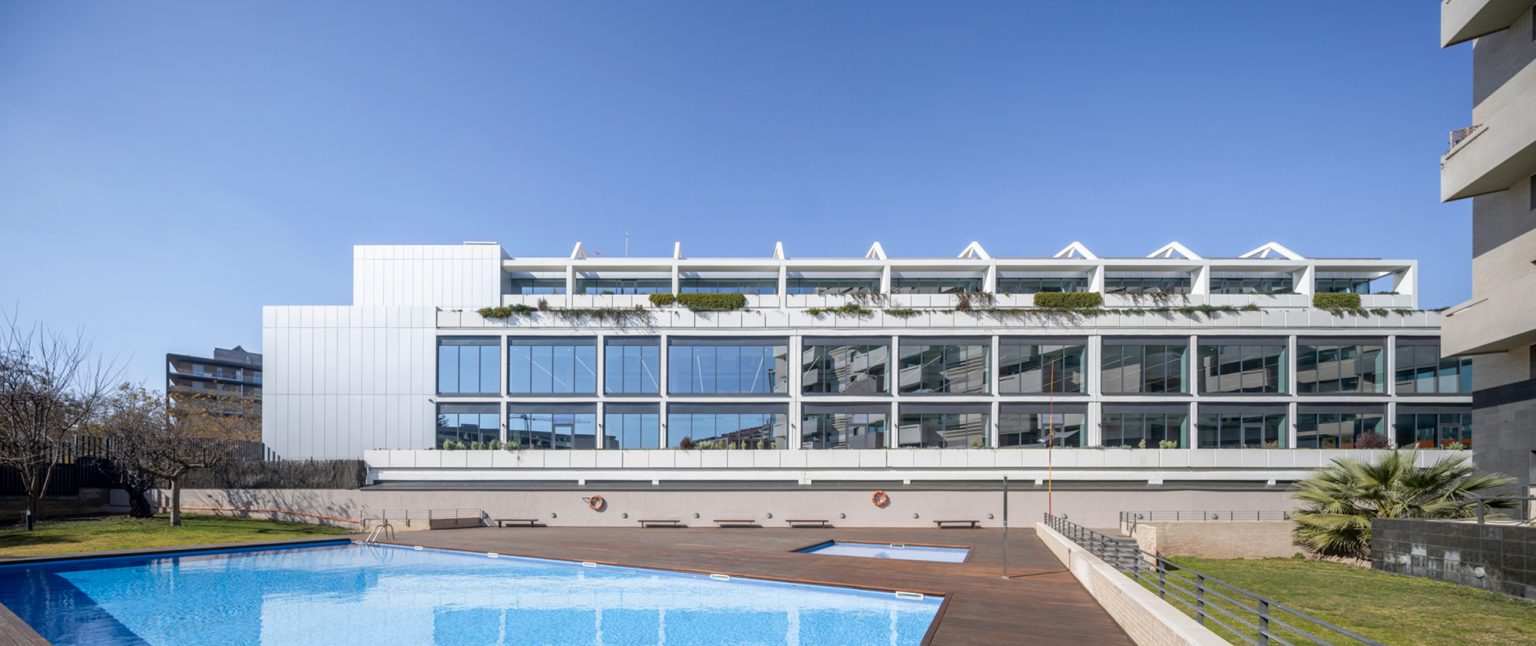
The Lumen office building features 8,106 m2 of office space along with an underground area designated for vehicle parking / © Antonio Navarro Wijkmark
© Antonio Navarro Wijkmark

An obsolete building as a starting point

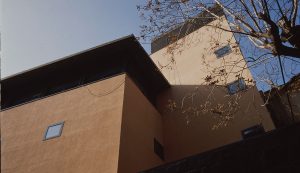
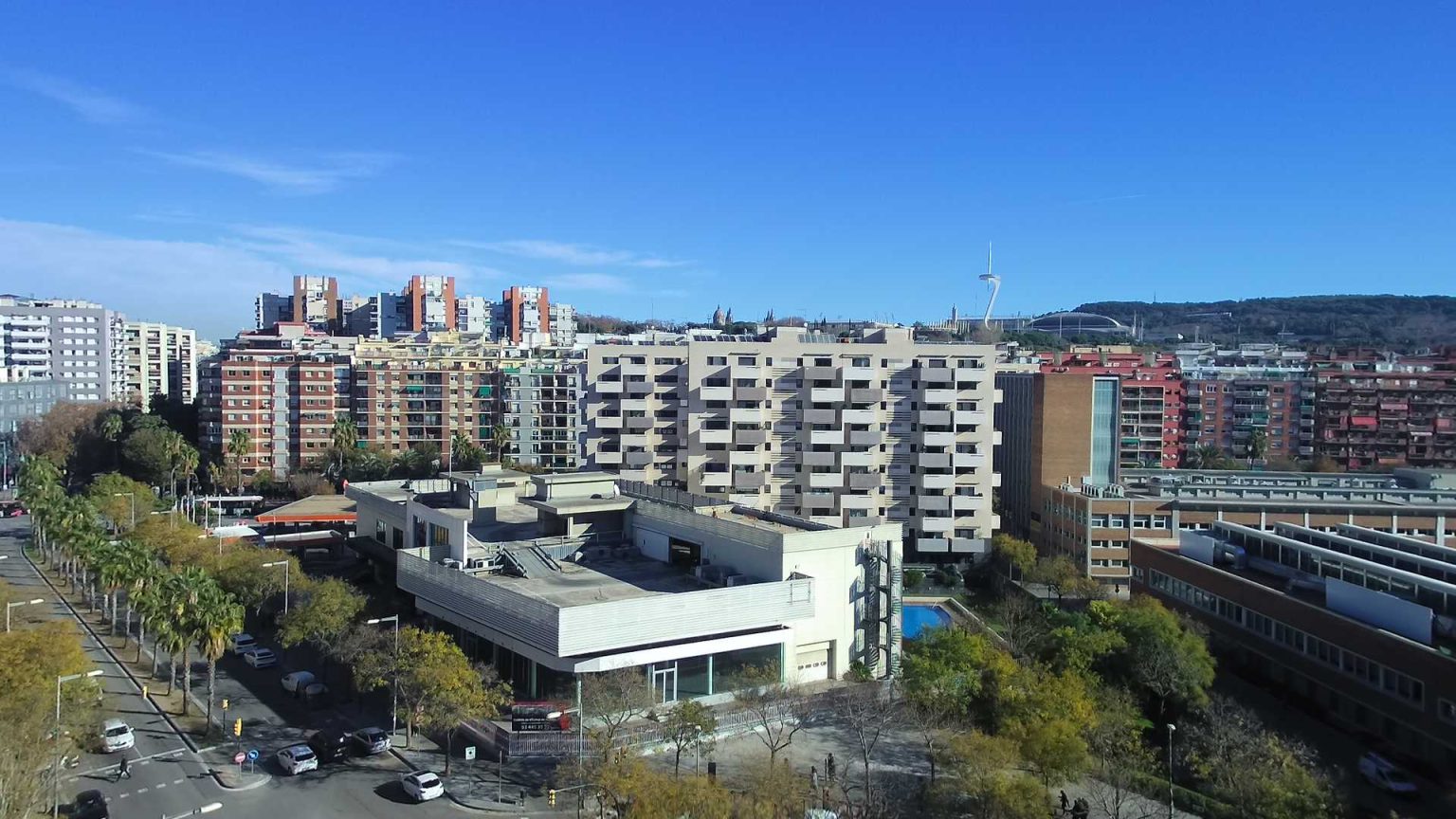
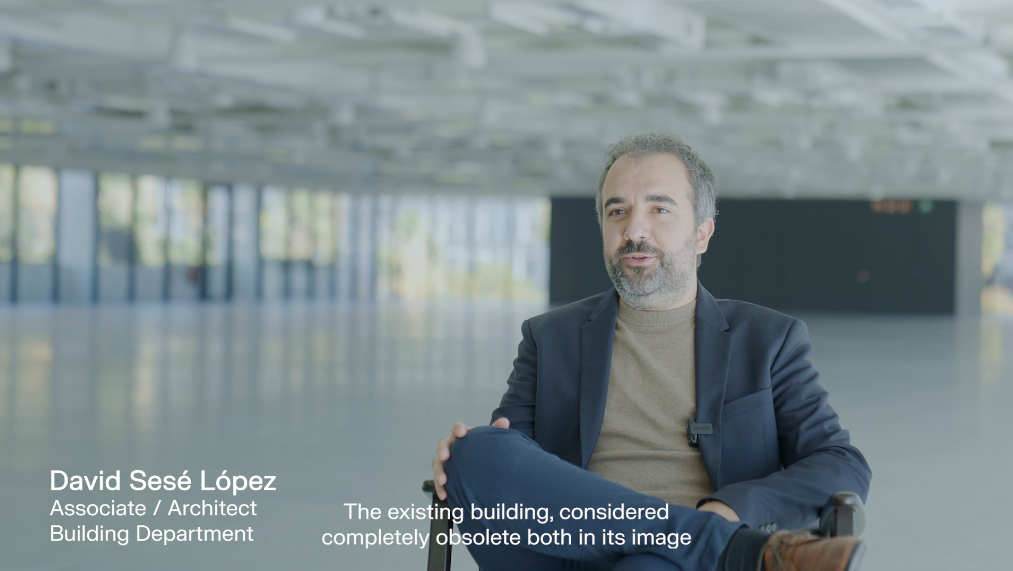
The existing building, considered completely obsolete both in terms of its appearance and its intended purpose, was originally designed as a car dealership and workshop. The main goal of the project was to transform a building designed for cars into one designed for people and their well-being, where new corporate offices would be situated. Furthermore, the building did not utilize the maximum permitted floor area, hence the renovation included a plan to expand it by adding two new floors.

↑ The original building, former car dealership and workshop.
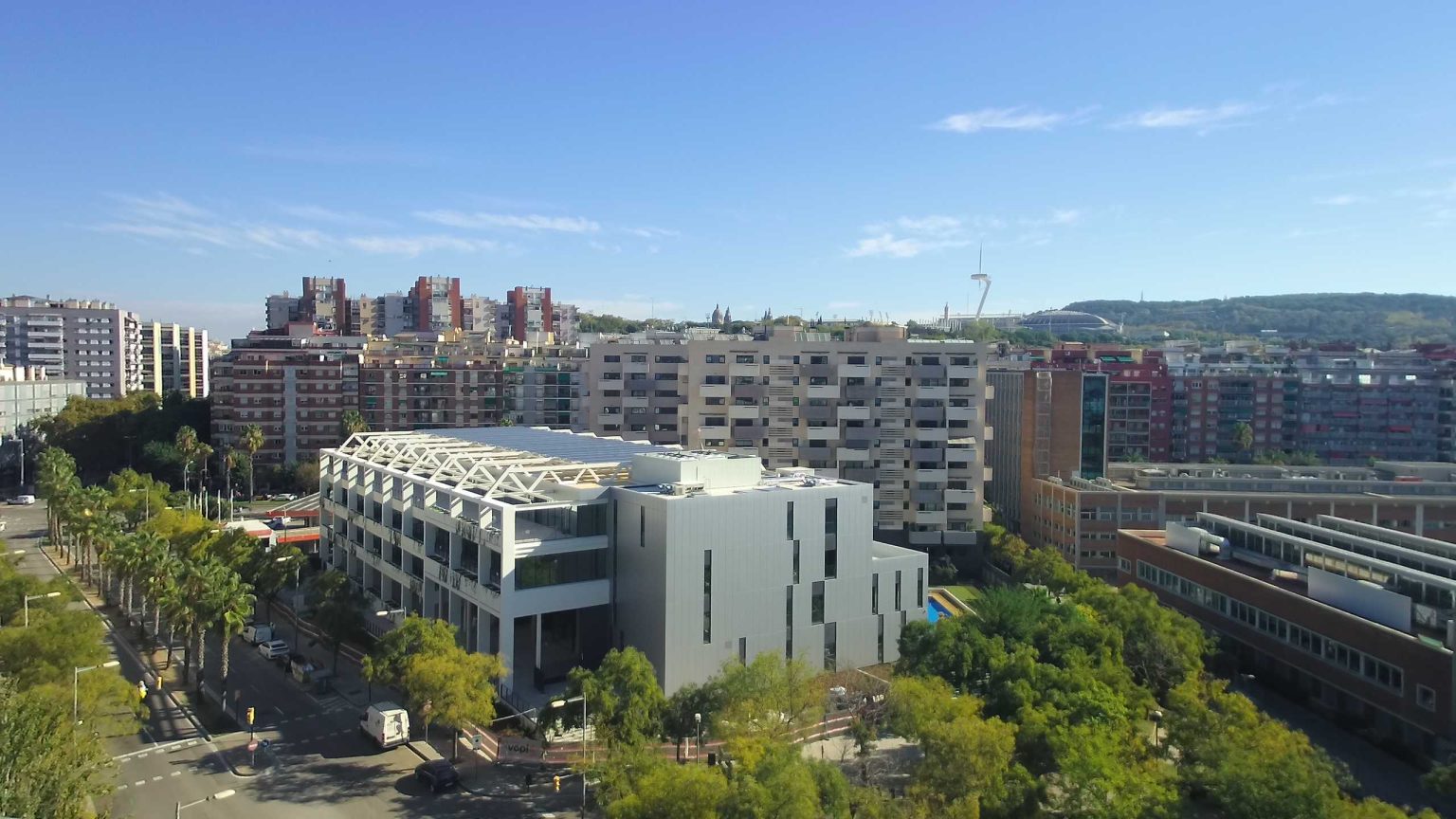
→ The new Lumen office building.

An access that enhances permeability

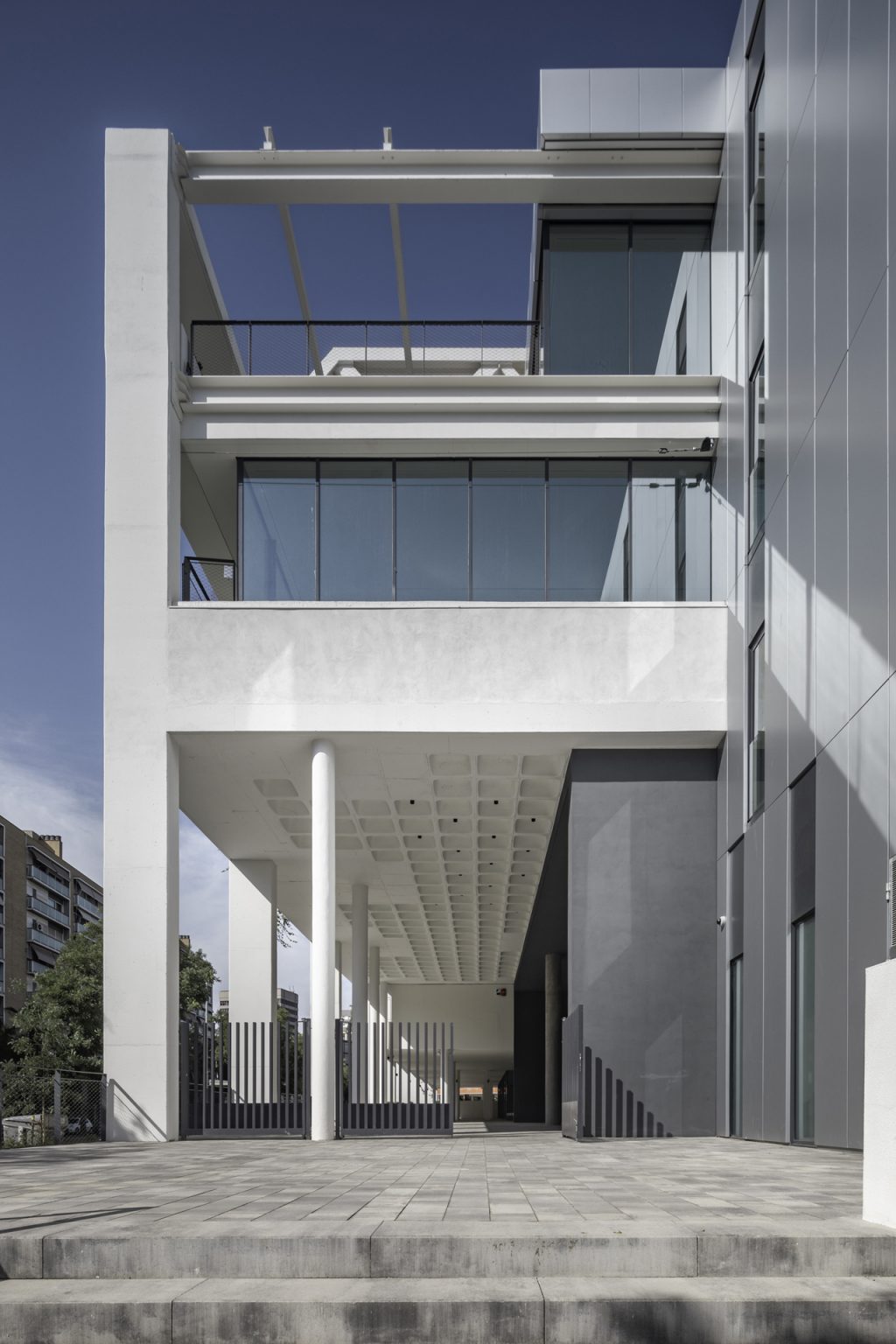
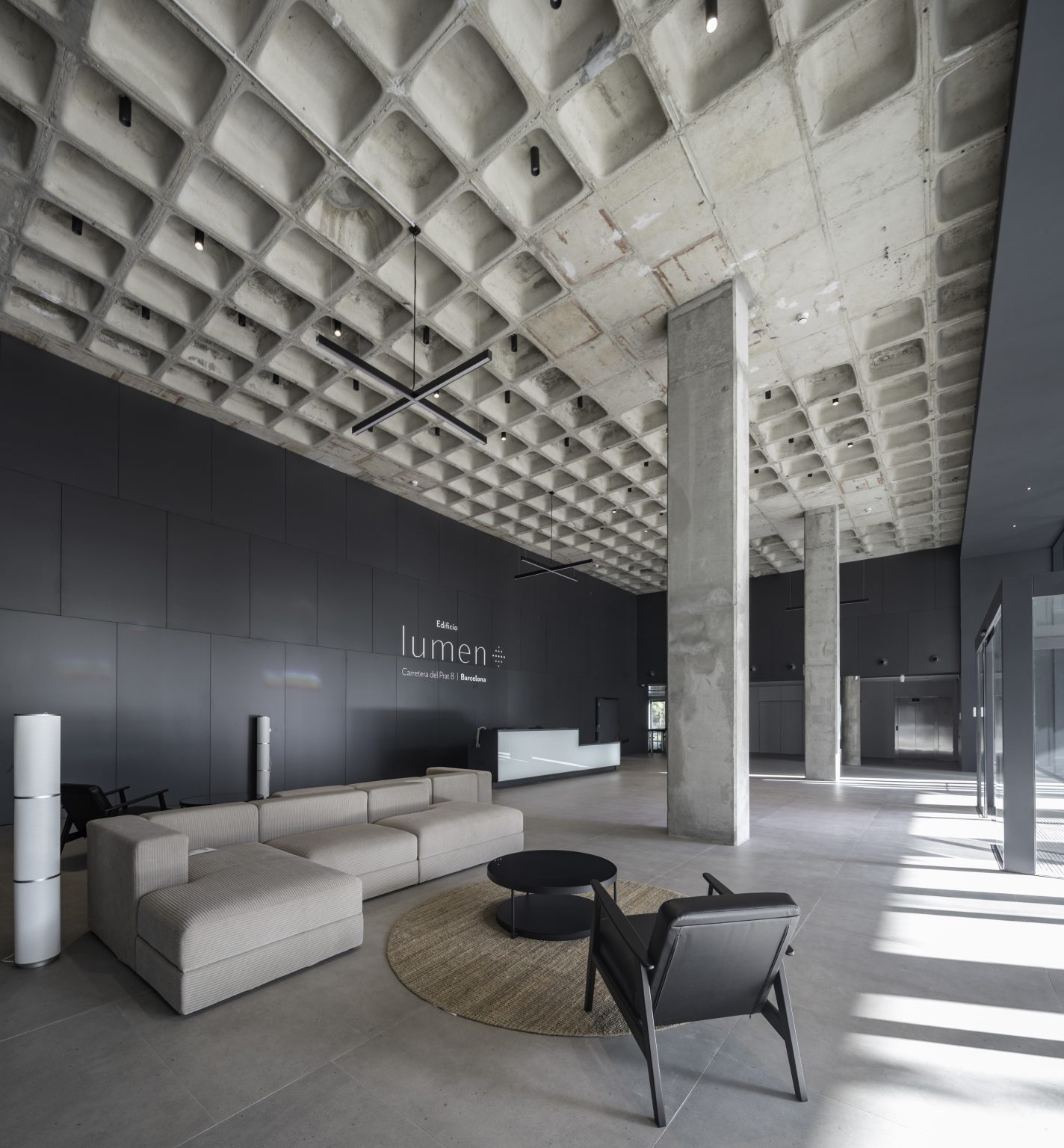
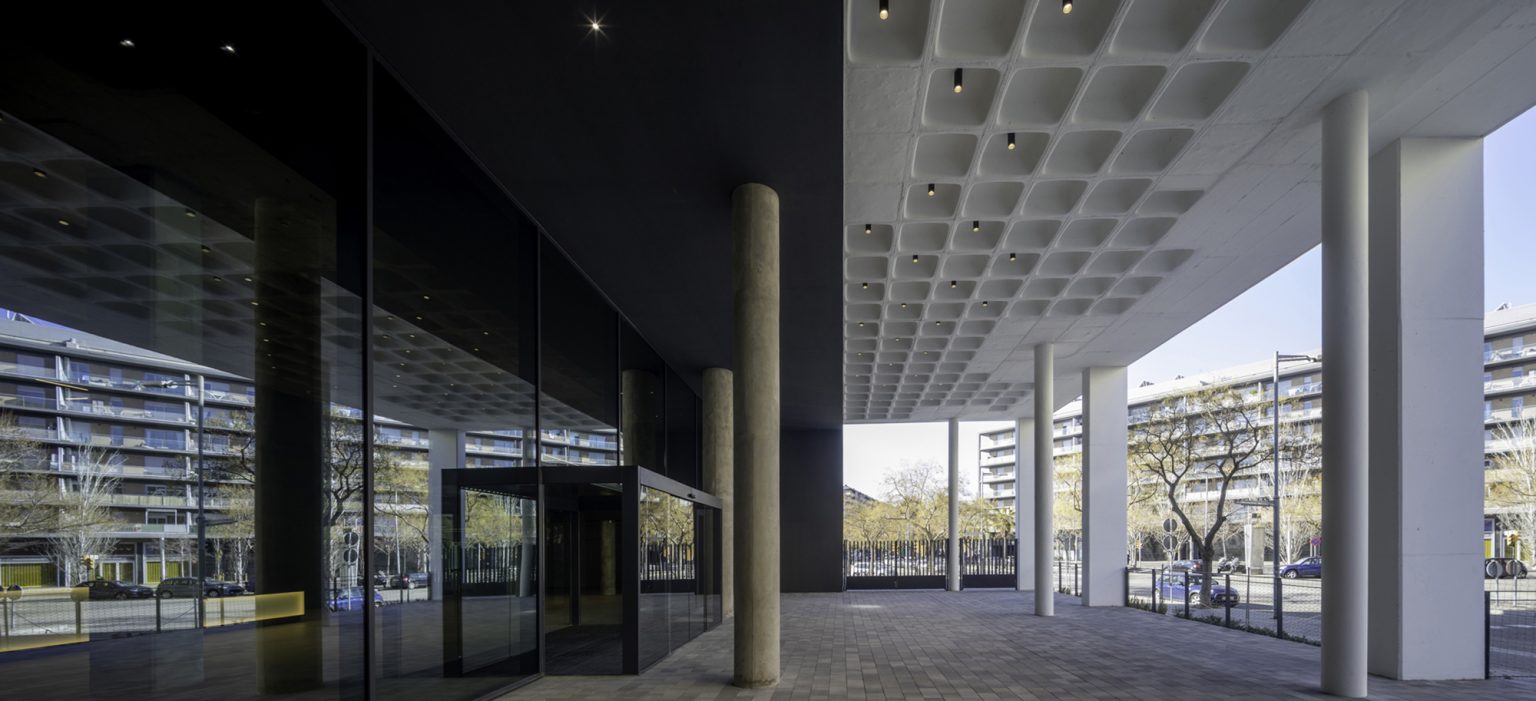
Access to the building is situated on one of the corners, through an elevated porch above the street, extending a warm welcome to users. Within this double-height covered area, a large curtain wall allows permeability and establishes a direct visual connection with the entrance hall.

© Antonio Navarro Wijkmark
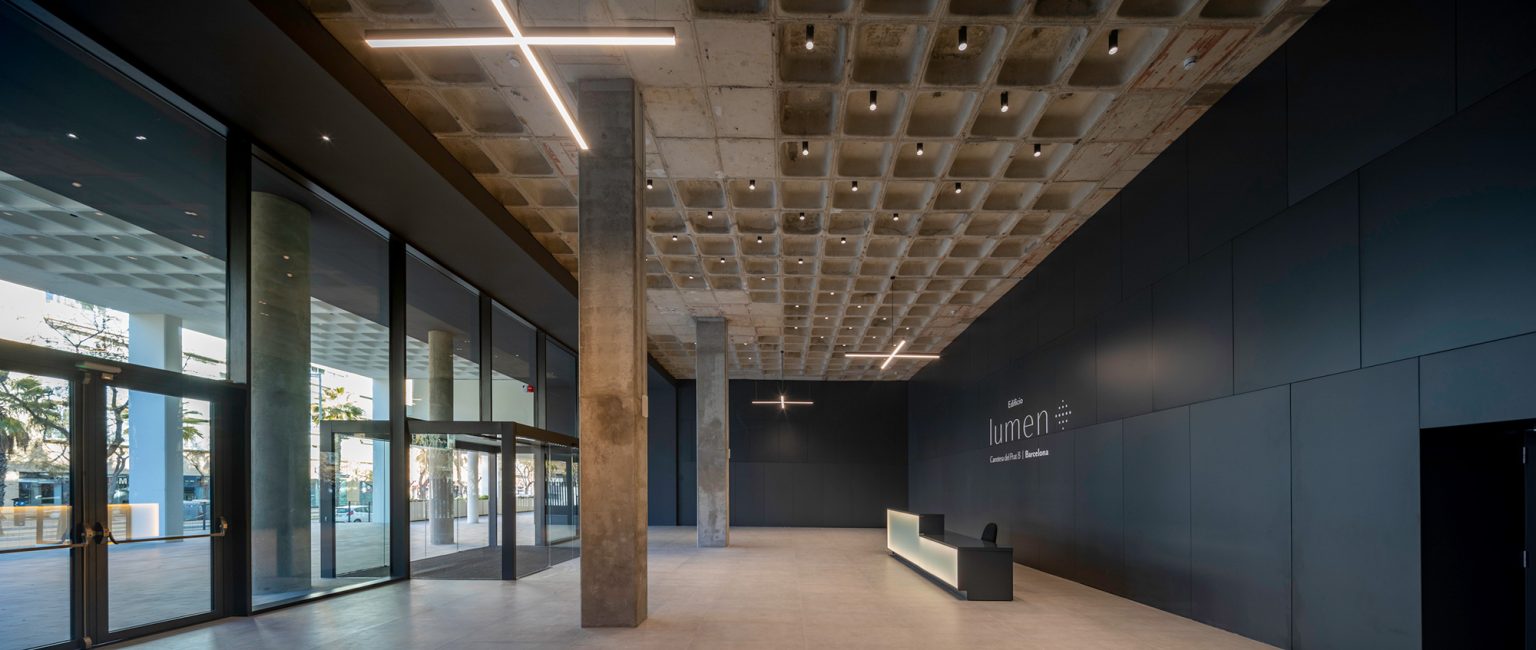
The composition of colors and finishes in the entrance hall highlights the preservation of the original structural elements such as ceilings and pillars, which coexist in harmony with the new structure of the building. © Antonio Navarro Wijkmark.

A new image of the building through a biophilic façade

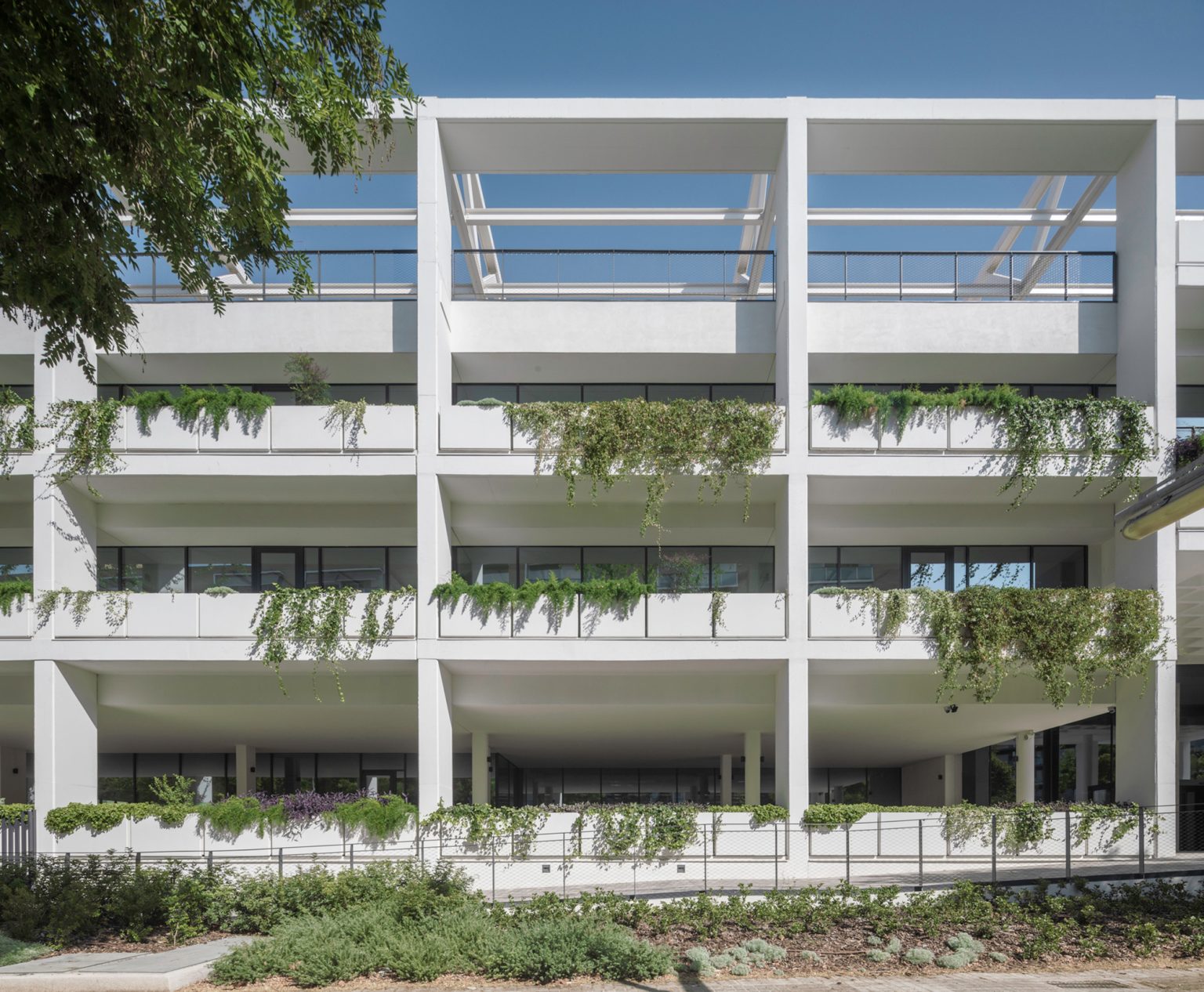
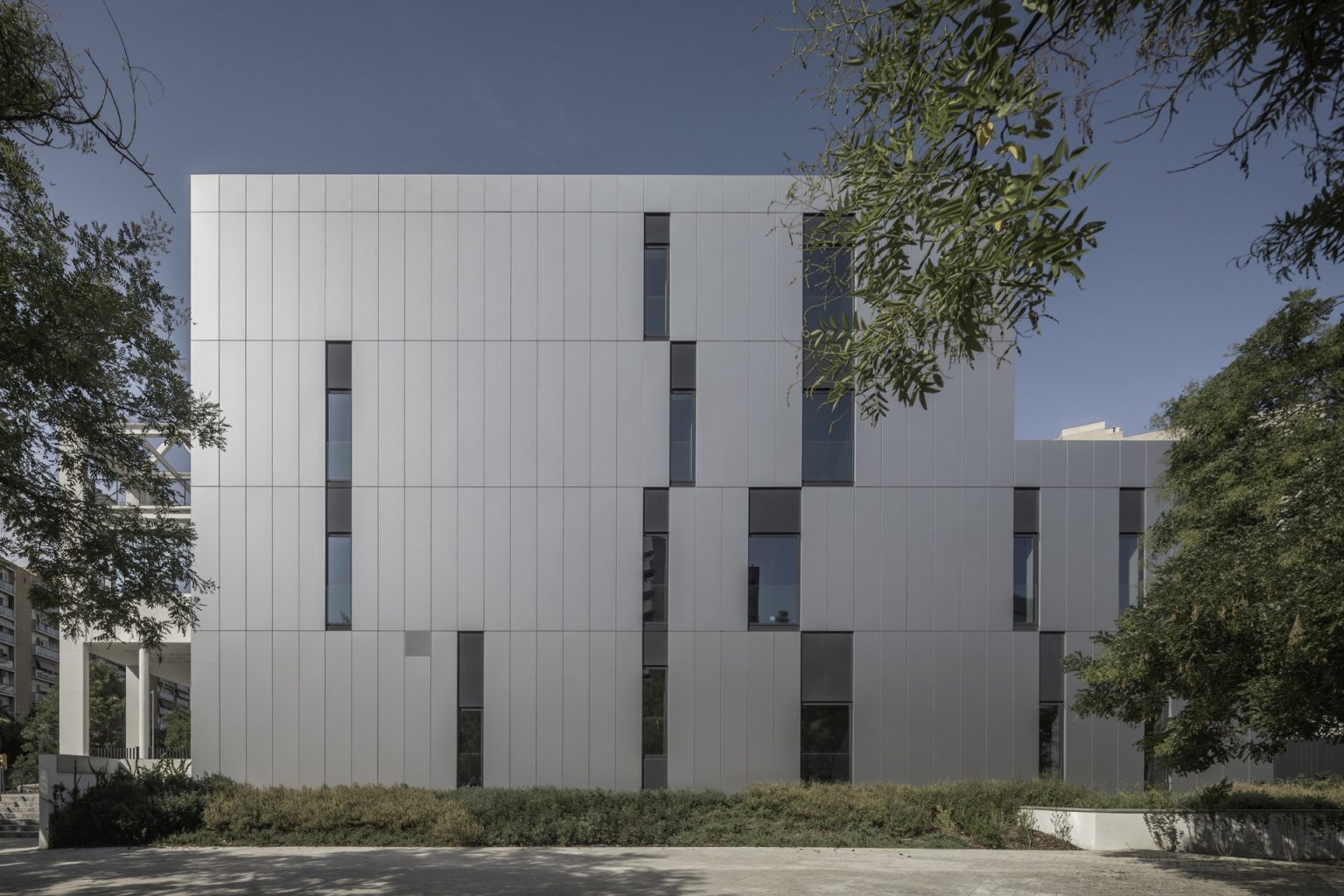
The intervention consisted of completely dismantling the existing envelope, which was enclosed and had irregular volumes, to create a new, more open, transparent, and organized façade. This improved lighting, ventilation, and insulation, while also enhancing the connection with the immediate surroundings.

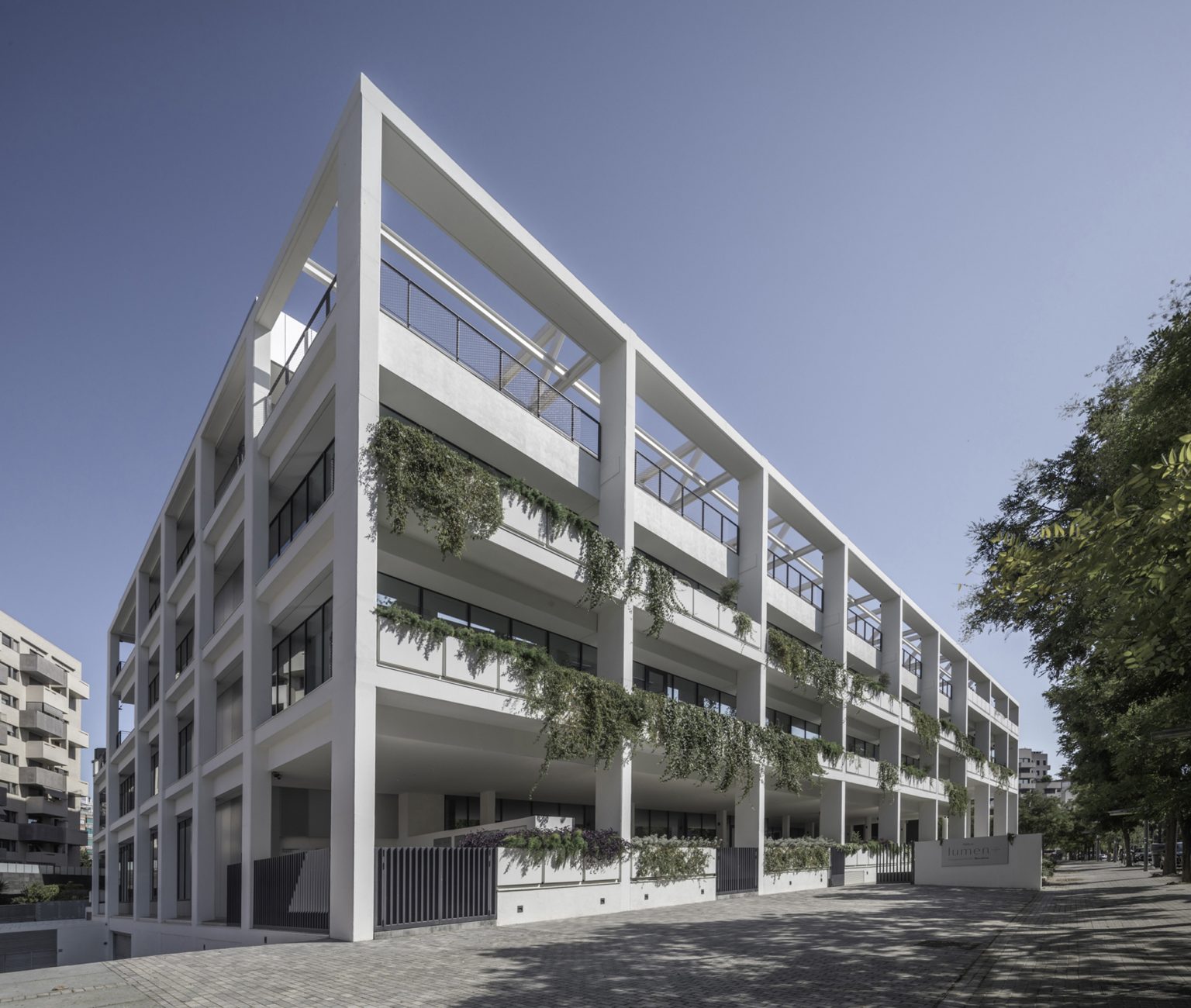
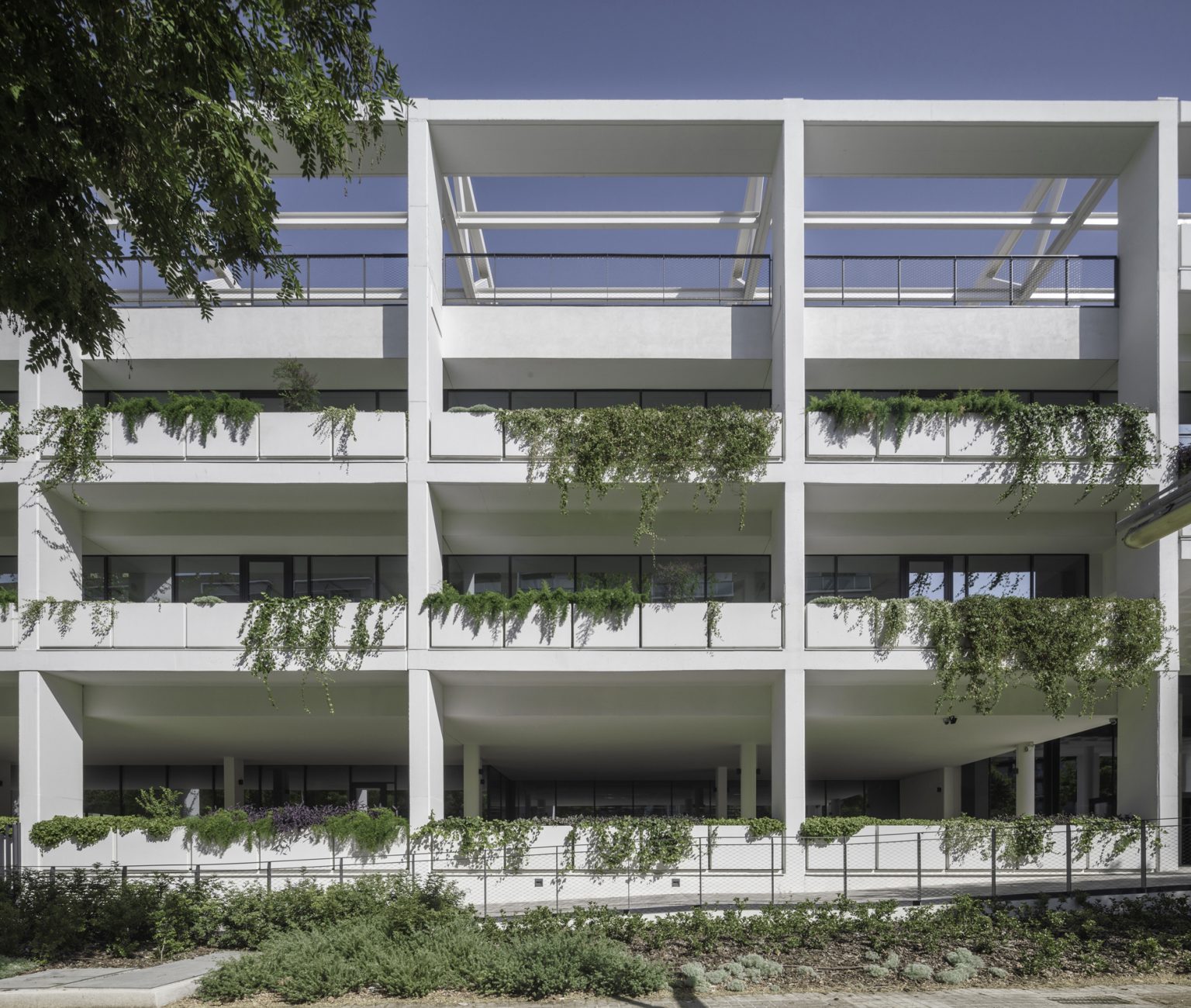
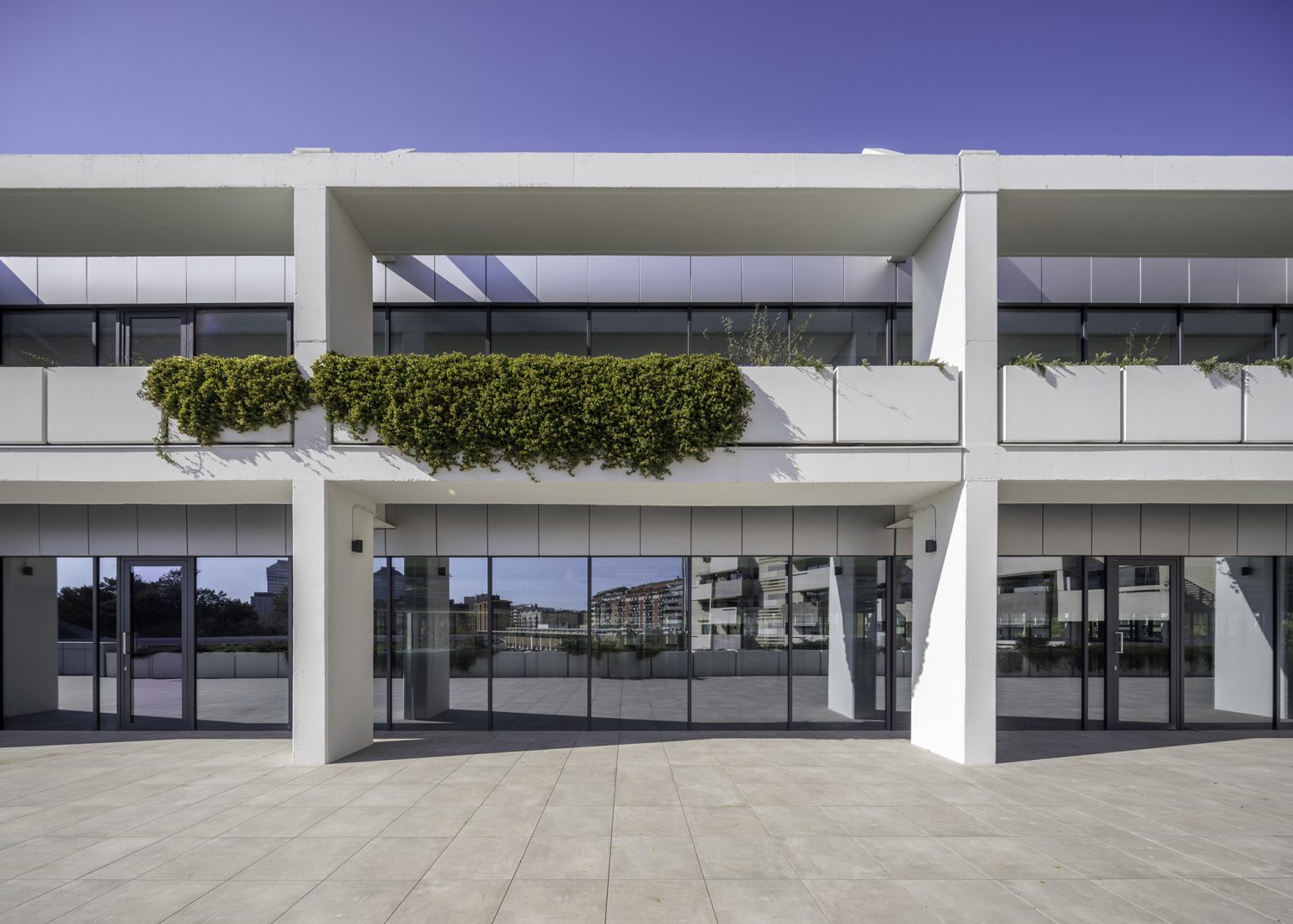
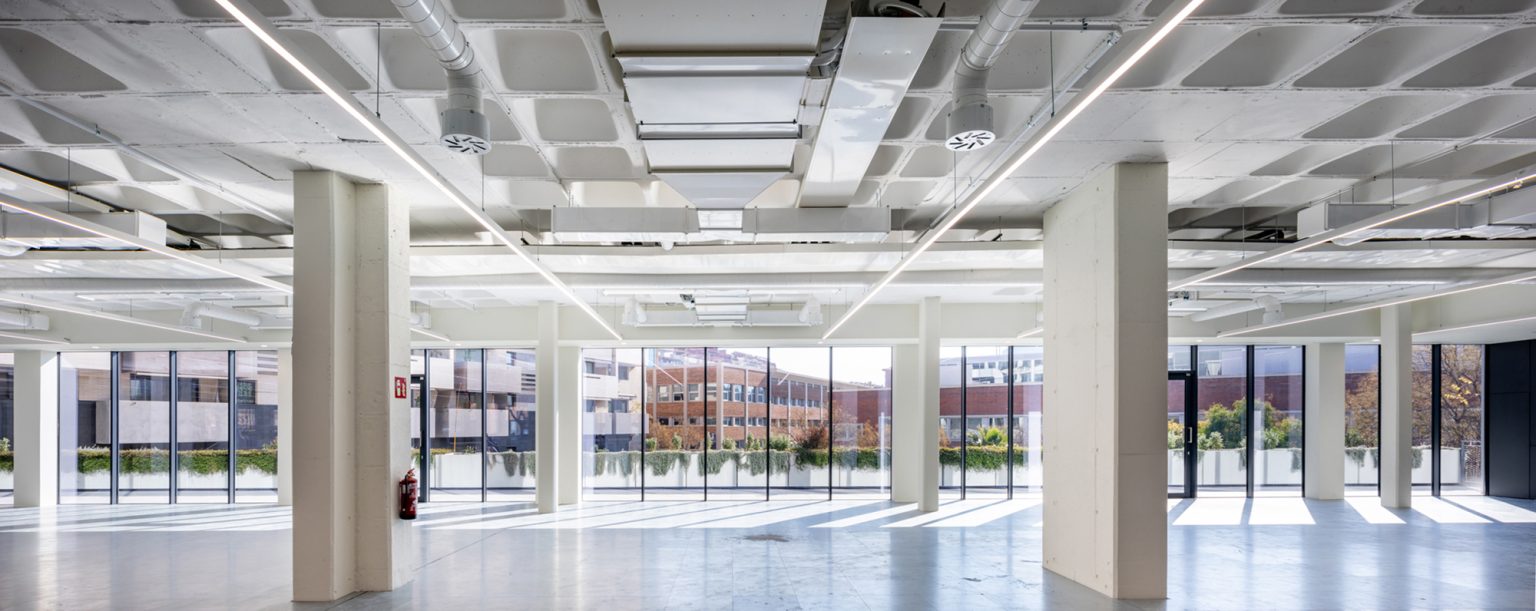
The new carpentry is recessed from the façade, providing accessible terraces on both sides at all levels. These covered outdoor spaces not only facilitate the cleaning and maintenance of the façades without the need for additional equipment but also serve as recreational areas where biophilia in the work environment is enriched by the introduction of vegetation.

This vegetative filter assumes a significant role in the new façade’s appearance, simultaneously promoting the building’s bioclimatic behavior and aiding in the reduction of the “heat island” effect.

© Antonio Navarro Wijkmark
Thanks to the recessing of the façade joinery, terraces with spacious planters are generated, promoting biophilia and well-being in the building. © Antonio Navarro Wijkmark.
© Antonio Navarro Wijkmark

From a polluting canopy to a green and productive canopy

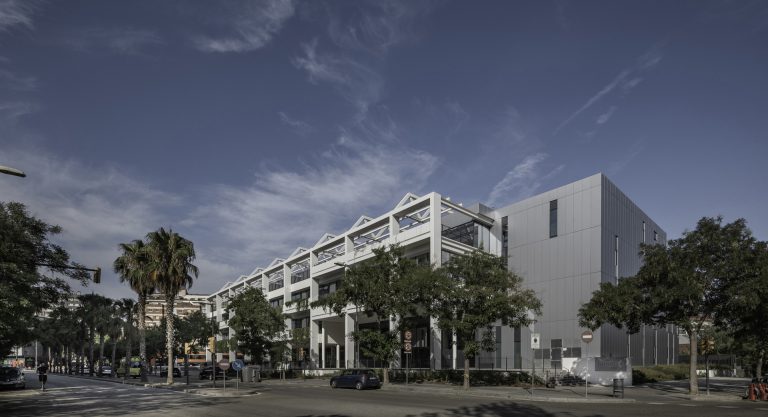
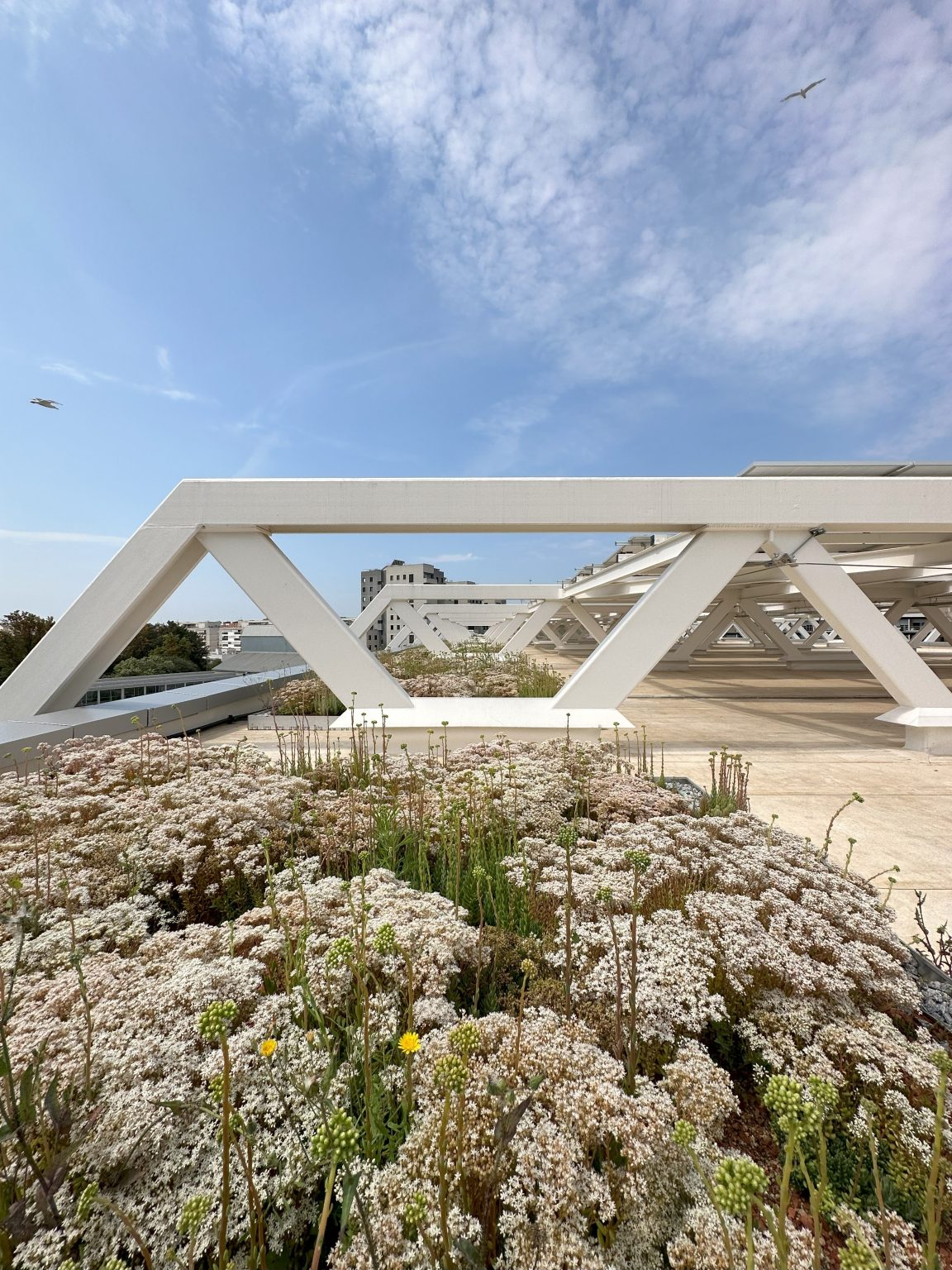
Due to the proximity and height of neighboring buildings, the roof is considered the fifth facade of the building. For this reason, and to achieve greater height in the floors, the trusses are positioned above the roof plane, turning the structure into a key element in the building’s architectural image.

Additionally, landscaped areas and a pergola with photovoltaic panels are introduced. These not only contribute to electricity production but also provide shade to the roof, reducing sunlight exposure and the building’s energy demand. This transformation shifts the roof from being a pollutant due to the presence of vehicles to a green and productive one.

© Antonio Navarro Wijkmark

Rehabilitation as a principle of sustainability

Reusing existing buildings, either partially or entirely, is a fundamental principle of sustainability. Construction involves ecological impact, energy consumption, and waste generation that have a negative impact on the environment. Rehabilitation allows for a reduction in this negative impact compared to constructing a new building, resulting in lower energy consumption, reduced CO₂ emissions, decreased waste volume, and less extraction of raw materials.

For this reason, the reuse of the existing structure has been an initial premise of the project, a crucial decision that prolongs and enhances the lifespan of a consolidated structure, amortizing the ecological impact generated in its initial construction over twice the time.

The structure’s good condition and sufficient load-bearing capacity for accommodating the new use have made reinforcing or consolidating works practically unnecessary. Therefore, the demolition intervention was limited to dismantling the original façade and removing partitions, finishes, and interior installations, while preserving the majority of the structure. The only structural elements that needed to be demolished due to incompatibility with the new use were the interior ramps, stairs, and some mezzanines.

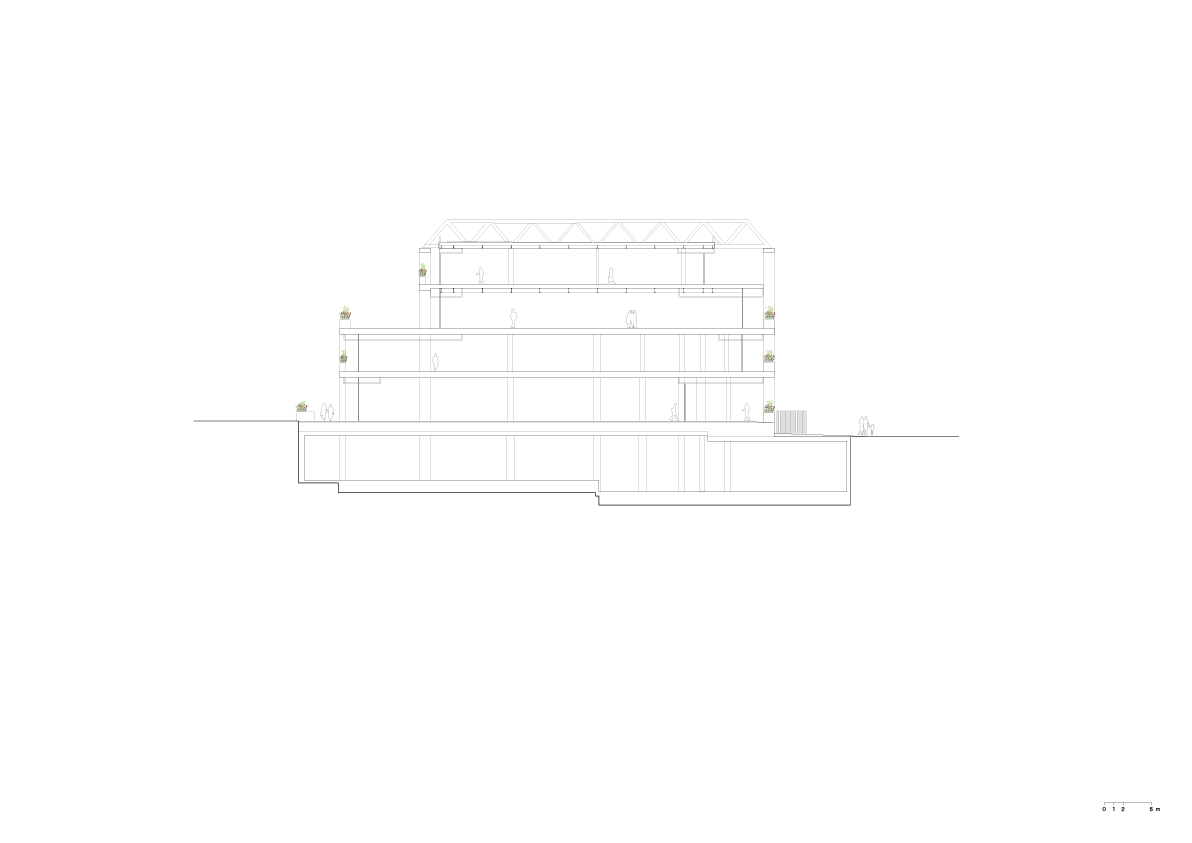
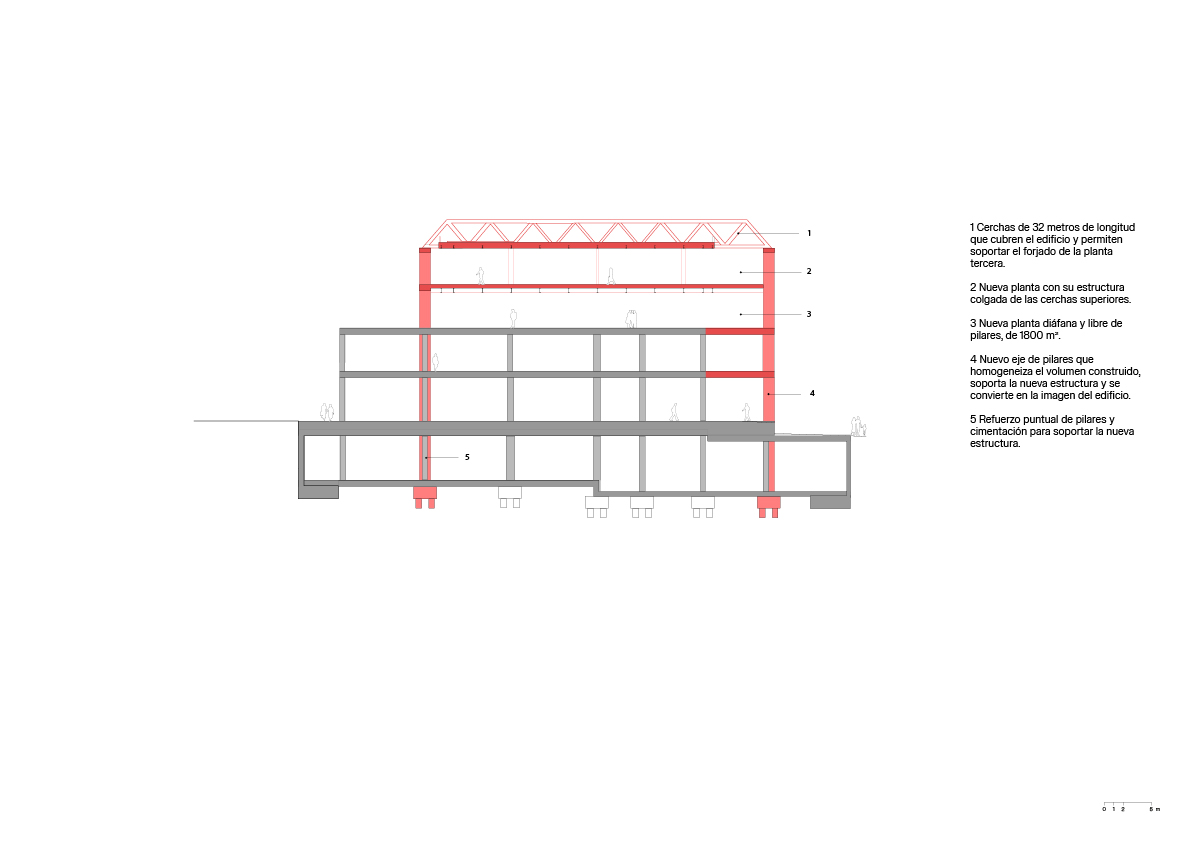
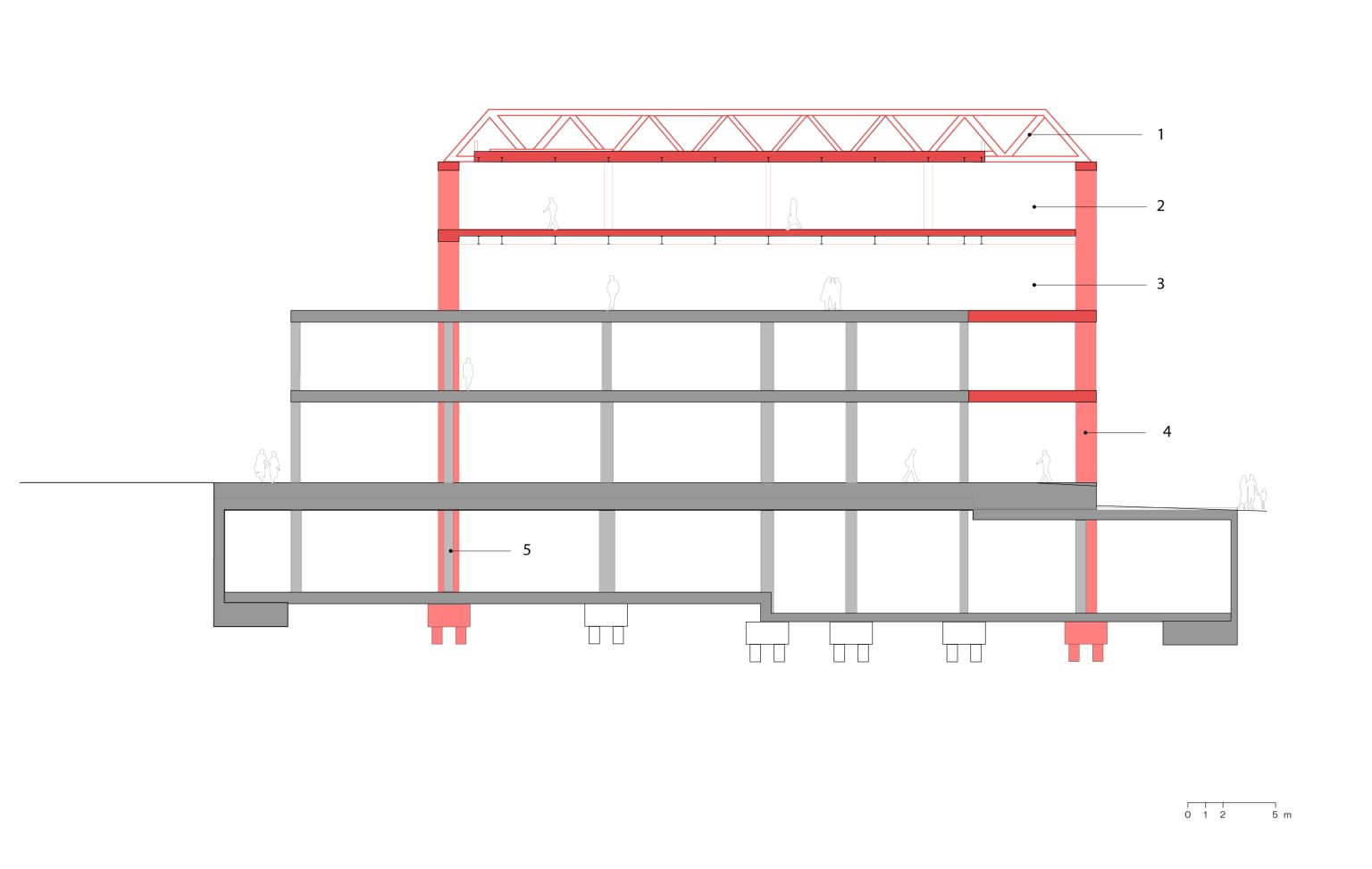
1. 32-meter-long trusses covering the building to support the third-floor slab. 2. New floor with its structure suspended from the upper trusses. 3. New open-plan, pillar-free floor of 1800 m². 4. New array of pillars that harmonizes the built volume, supports the new structure, and becomes the defining feature of the building. 5. Specific reinforcement of pillars and foundations to support the new structure.
© Antonio Navarro Wijkmark

A new metal truss system

The new office structure is designed to respond to the need to add two new levels, minimizing the impact and overload on the existing structure, with the aim of reducing the necessity for structural reinforcement.

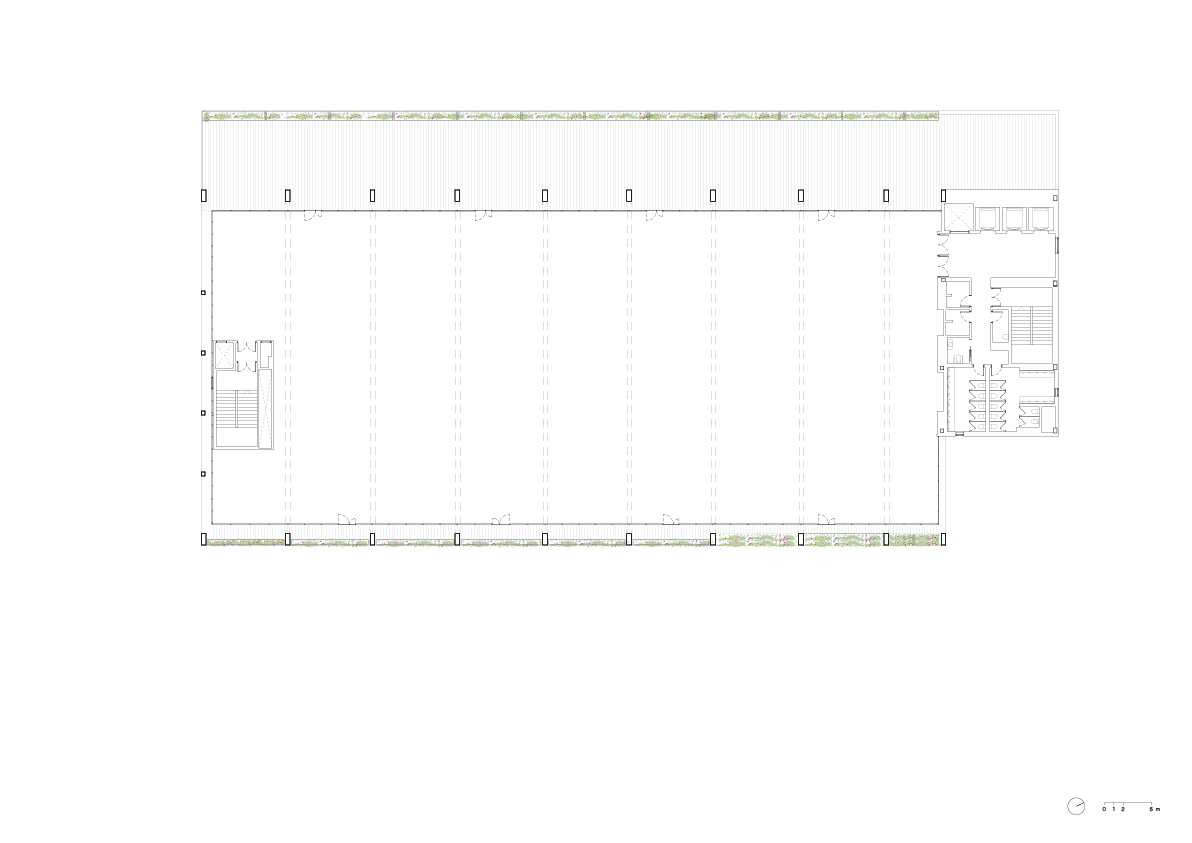
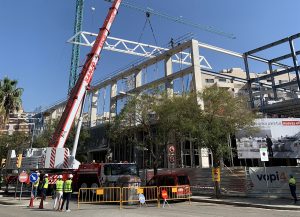
This is achieved by reinforcing a single axis of interior pillars and creating a new one in front of the main façade, supporting 32-meter-long metal trusses. From them, the new lightweight roof and the collaborating floor slab on the third floor hang, covering an office space of 1,800 m2 completely free of pillars.

The metal trusses were fabricated in the workshop and transported to the site as a single piece. This industrialization process ensures a higher quality of execution, while also significantly reducing construction time, as they can be manufactured concurrently with other on-site work.

The metal trusses allow for the creation of two new levels: the new roof and the third-floor composite floor slab, covering an office space of 1,800 m2 completely free of pillars on the second floor. © Antonio Navarro Wijkmark.

Flexible, spacious and bright interiors

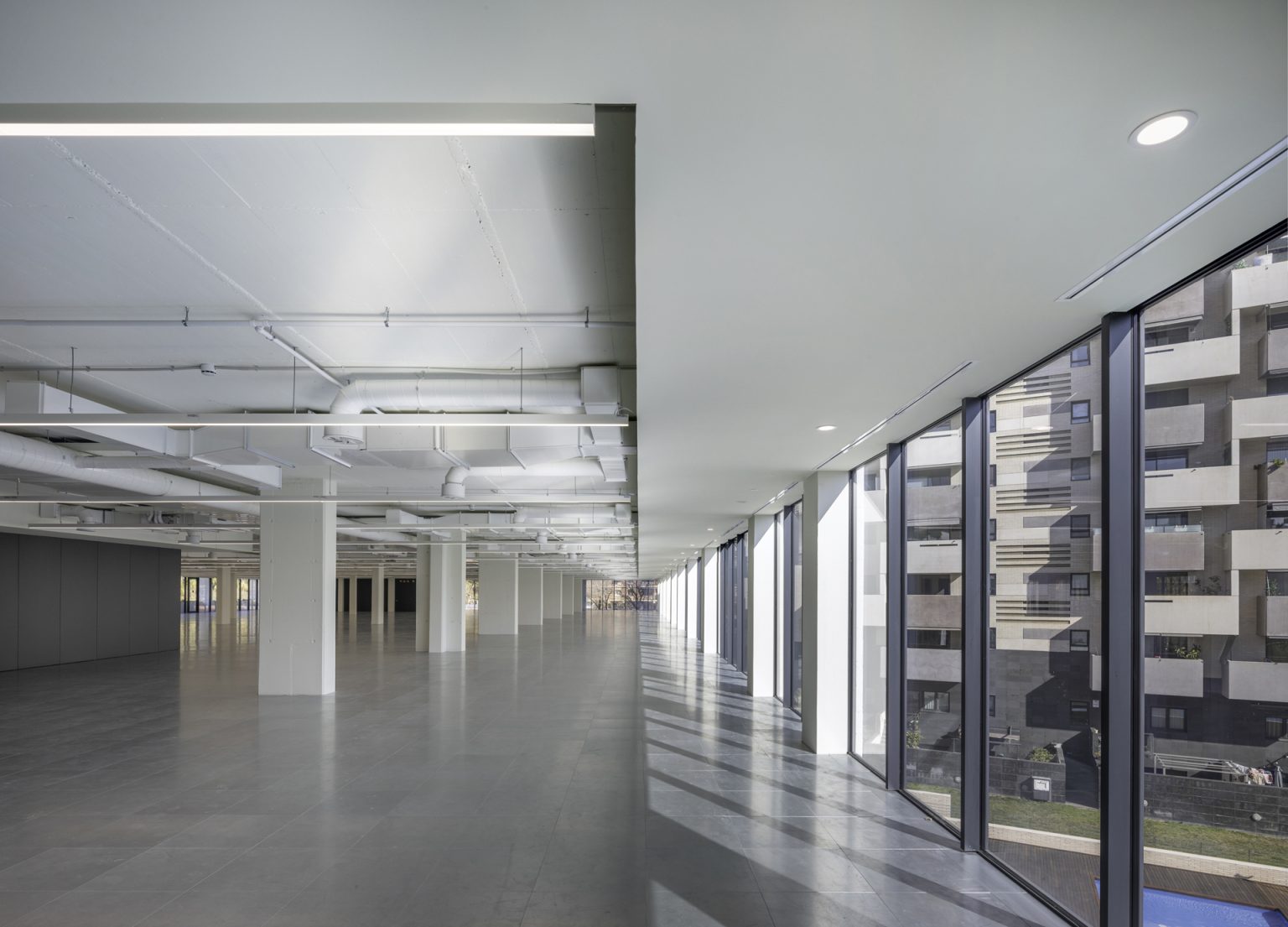
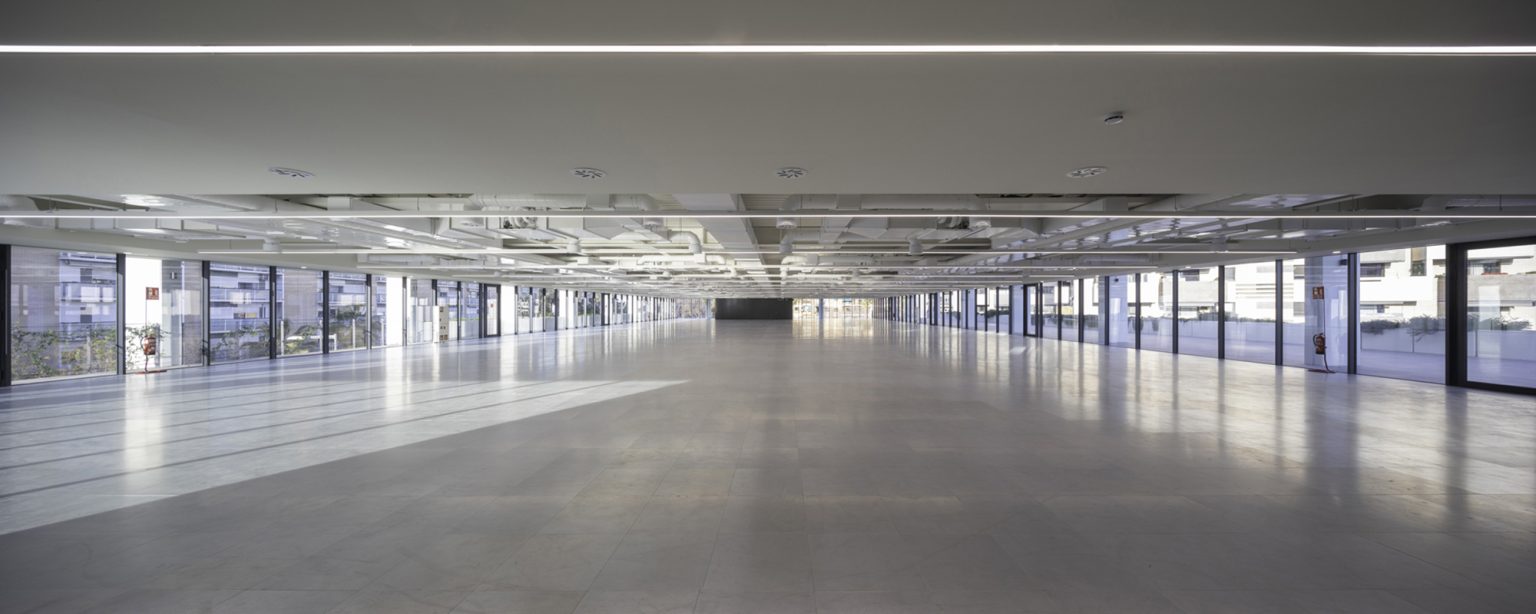
In the interior, the project optimizes the location of the stair and lift cores by grouping them, unlike the original building, at the ends of each floor, favoring the creation of large, open-plan spaces that allow for greater flexibility of use.

The second floor, designated for offices, is entirely free of pillars, creating a spacious open-plan office area of 1,800 square meters, while the lower floors adapt to the modulation of the existing structure, utilizing the double-height area for the implementation of the new access hall.

© Antonio Navarro Wijkmark
Projects

Construction work begins on the new metal structure of the offices in Carretera del Prat.

Read more
Construction work begins on the new metal structure of the offices in Carretera del Prat.